Delhi-NCR Feels Fresh Earthquake Tremors
New Delhi, April 2026: Strong earthquake tremors were felt across Delhi-NCR and several parts of North India late Friday night, triggering panic among residents who rushed out of homes and offices.
According to early reports, the tremors were caused by a 5.8 magnitude earthquake that struck the Hindu Kush region in Afghanistan, a seismically active zone known for frequent deep earthquakes.
The shaking was noticeable across Delhi, Noida, Gurugram, Ghaziabad, and nearby areas, with many people reporting sudden vibrations lasting a few seconds.
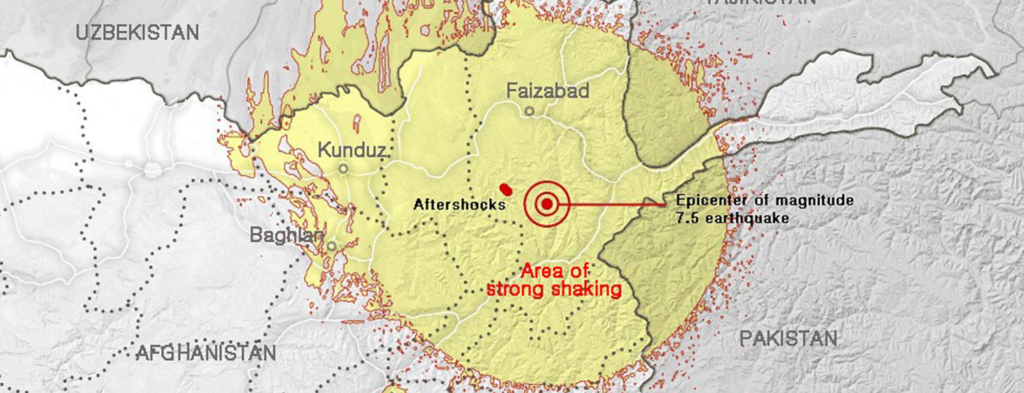
Epicentre and Magnitude Details
- Magnitude: 5.8 on the Richter scale
- Epicentre: Hindu Kush region, Afghanistan
- Depth: Deep-focus earthquake (typical for this region)
- Impact Zone: Afghanistan, Pakistan, North India including Delhi-NCR
Due to the earthquake’s depth and intensity, tremors traveled long distances, reaching parts of India despite the epicentre being outside the country.
Panic Among Residents, Social Media Flooded
As soon as the tremors were felt, many residents in Delhi-NCR rushed outdoors as a precaution. High-rise buildings experienced noticeable swaying, especially in densely populated areas.
Social media platforms like X (Twitter) and Instagram were quickly flooded with reactions. Some users described the shaking as “strong but brief,” while others initially mistook it for construction vibrations or heavy vehicles.
Interestingly, many users reacted humorously, questioning whether it was an actual earthquake or something else.
Casualties and Damage Reports
- Delhi-NCR: No immediate reports of damage or injuries
- Afghanistan: At least 8 deaths reported due to the earthquake
Authorities in India confirmed that the tremors caused no major structural damage, though precautionary inspections are ongoing.
Why Delhi Feels Earthquakes Frequently
Delhi is considered a seismically sensitive region. Experts explain this due to:
- Presence of multiple active fault lines
- Proximity to the Himalayan seismic belt
- Classification under Seismic Zone IV (high risk)
Because of this, even distant earthquakes—like those in Afghanistan or Nepal—can be felt in the capital.
Past Earthquake Activity in Delhi
Delhi has experienced several minor to moderate tremors in recent years:
- January 2026: 2.8 magnitude quake in North Delhi (no damage)
- 2025: 4.4 magnitude earthquake from Jhajjar felt across NCR
- Frequent low-intensity tremors due to regional seismic activity
While most are mild, experts warn that the region remains vulnerable to stronger earthquakes in the future.
What To Do During Earthquake Tremors
Authorities advise residents to stay calm and follow safety protocols:
- Move to open spaces away from buildings
- Avoid elevators during tremors
- Take cover under sturdy furniture if indoors
- Stay away from windows and glass
Preparedness is key, especially in high-risk zones like Delhi-NCR.
Conclusion
The latest Delhi earthquake tremors (April 2026) once again highlight how interconnected seismic activity is across South Asia. Even earthquakes originating hundreds of kilometers away can impact densely populated regions like Delhi.
While no major damage has been reported this time, experts continue to stress the importance of earthquake preparedness and awareness in the capital.
FAQs (SEO Boost Section)
Q1. Why were earthquake tremors felt in Delhi today?
Tremors were caused by a 5.8 magnitude earthquake in Afghanistan’s Hindu Kush region, whose impact spread across North India.
Q2. Was there any damage in Delhi-NCR?
No major damage or casualties have been reported in Delhi.
Q3. Is Delhi prone to earthquakes?
Yes, Delhi falls under Seismic Zone IV, making it vulnerable to earthquakes.
Q4. Where was the epicentre of the earthquake?
The epicentre was located in the Hindu Kush region of Afghanistan.

Sunil Singh is a travel writer and hill station explorer specialising in Kerala’s tea gardens, with years of firsthand experience visiting Munnar’s estates and plantations. Through Munnar Tea Gardens, he shares real-visit guides, honest reviews, and practical tips to help travellers plan smarter trips.