There’s a moment — somewhere between the first bend past Mattupetty Dam and the smell of wet earth after a Kerala drizzle — when you realize that cycling through Munnar isn’t just exercise. It’s a full sensory experience that no jeep tour or resort balcony can replicate.
I’ve spoken to local guides, cyclists who’ve done multiple laps of the Munnar hills, and rental shop owners to bring you the most updated, honest guide for 2026. Whether you’re a solo traveler chasing misty mornings or a couple looking for a slow, scenic adventure, this guide covers everything you need before you clip in.
Why Cycle Through Munnar? The Case for Two Wheels
Most people arrive in Munnar, do the standard jeep safari, sip some tea at a factory, and leave. Nothing wrong with that. But cycling gives you something different: pace.
You stop when a tea picker waves at you. You notice the way light filters through the estate canopy at 7 AM. You smell cardamom before you even see the spice garden. At 15–20 km/h on a decent hybrid, Munnar unfolds in a way that 60 km/h just doesn’t allow.
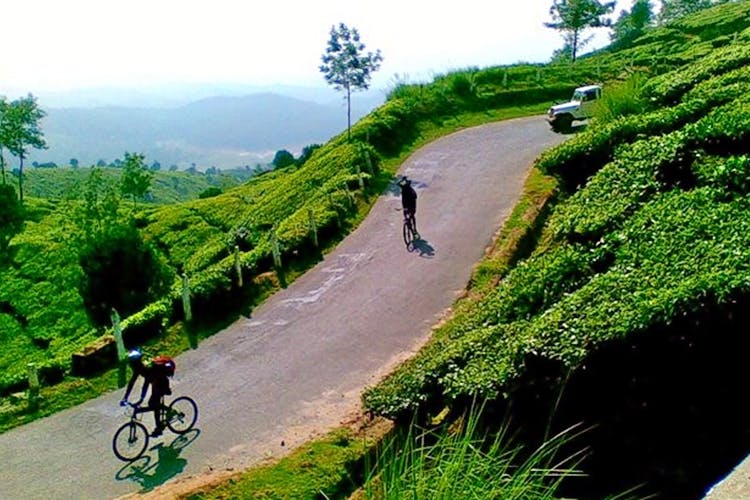
From an SEO and tourism data perspective, cycling tourism in Munnar has seen a steady rise since 2022, with the Kerala Tourism Board actively promoting eco-friendly travel routes across the Western Ghats. Cyclists are increasingly choosing Munnar over Ooty or Kodaikanal specifically for its lower traffic density on inner plantation roads — a practical advantage that still holds in 2026.
Best Cycling Routes in Munnar (2026)
Route 1 — Munnar Town to Top Station (32 km One-Way)
This is the crown jewel. The Top Station road is challenging but deeply rewarding. You gain roughly 1,200 meters of elevation from Munnar town to the Tamil Nadu border viewpoint, so prepare your lungs and your thighs.
What you’ll see: Kolukkumalai estate (the world’s highest tea plantation), Rajamala hills, Nilgiri tahr in the grasslands, and the sweeping view of the Theni valley from 1,880 meters above sea level.
Best time to ride: 6:30 AM start. You want to hit the upper sections before 10 AM to avoid both tourist traffic and afternoon mist that can reduce visibility significantly.
Road condition (2026): The first 10 km is smooth asphalt. After the Rajamala junction, expect some patchy stretches — a front suspension fork helps here.
Difficulty: Hard. Not suitable for first-time riders or basic town cycles.
Route 2 — Munnar to Mattupetty Loop (22 km)
This is the sweet spot for most cyclists — challenging enough to feel real, beautiful enough to constantly make you stop for photos.
Starting from Munnar town, the road climbs past the KDHP (Kanan Devan Hills Plantations) estates toward Mattupetty Dam and the Indo-Swiss dairy farm. The return loop brings you through Kundala Lake and back via the tea-lined SH17.
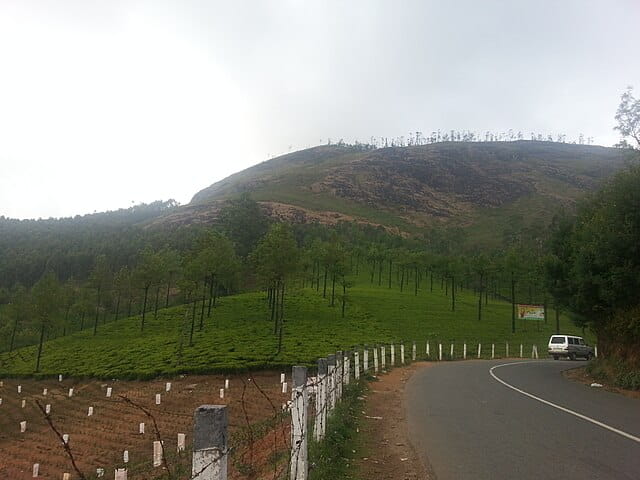
What you’ll see: Mattupetty reservoir and dam, Echo Point, dense Shola forest patches, plantation workers during the morning harvest (typically 7–11 AM), and bison grazing near the treeline.
Best time to ride: Early morning for wildlife and cooler temperatures. This loop is also good for evening rides if you start by 3 PM.
Road condition: Mostly good. A 3–4 km stretch near Echo Point has speed bumps every 200 meters — manageable, but worth knowing.
Difficulty: Moderate. A decent starting point if you’ve not cycled hills before.
Route 3 — Chinnakanal Waterfall Trail (18 km)
This one is less talked about on travel forums and, honestly, that’s exactly why it’s special.
Head out from Munnar town toward Adimali, then fork off toward Chinnakanal. The road cuts through Tata Tea estates and small tribal settlements. You’ll pass roadside cardamom stalls, a small church surrounded by misty hills, and eventually reach the Chinnakanal falls overlook.
Who is this for? Cyclists who want plantation immersion without the tourist traffic. You might not see another tourist for stretches of 3–4 km.
Difficulty: Easy to moderate. The elevation gain is gentler, making it ideal for leisure riders.
Route 4 — Nyayamakad and Devikulam Circuit (28 km)
Devikulam is often called “the Switzerland of Kerala” — which is a tourist board stretch — but the lakes and eucalyptus forests do have an almost otherworldly quality on clear mornings.
This route takes you through rolling tea terraces, past a small hydro station, and to Sita Devi Lake. It’s one of Munnar’s quieter plantation roads and a favourite among photographers.
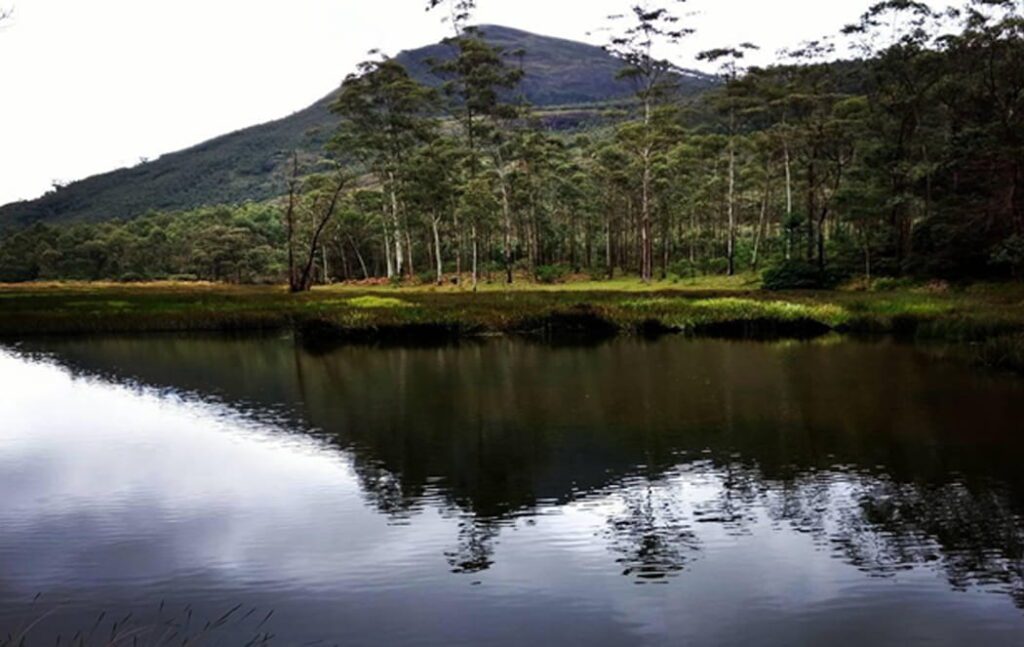
Difficulty: Moderate. Some steep pitches near the lake section.
Bicycle Rental in Munnar: Costs, Options & What to Look For
How Much Does It Cost to Rent a Cycle in Munnar (2026)?
Rental pricing has gone up slightly compared to pre-2023 rates, largely due to higher equipment costs and increased tourism demand. Here’s what you can expect in 2026:
| Cycle Type | Per Day (₹) | Per Half Day (₹) |
|---|---|---|
| Basic town cycle | ₹200–₹300 | ₹150 |
| Hybrid cycle (mid-range) | ₹400–₹600 | ₹250–₹350 |
| Mountain bike (front suspension) | ₹700–₹1,000 | ₹400–₹600 |
| Electric-assist cycle (e-bike) | ₹1,200–₹1,800 | ₹800–₹1,000 |
Pro tip: Negotiate for multi-day rentals. Most shops will offer 20–30% off if you rent for 3 or more days. Always ask whether a helmet is included — it usually isn’t by default, but most shops have them.
Where to Rent a Cycle in Munnar
Most rental shops are clustered around the old Munnar bus stand area and along the Kannan Devan Hills road. A few names that come up consistently among traveler forums and local guides:
Munnar Bicycle Club (near Spencers Junction) is well-regarded for its mid-range hybrid fleet and guided options. Staff here can advise on route conditions updated weekly — useful during monsoon months.
Green Ride Munnar offers electric cycles and has a growing reputation for decent maintenance standards. E-bikes are worth it if you’re doing Top Station and aren’t an experienced hill cyclist.
For those booking through resorts, many mid-range and upscale properties now include a bicycle in their activity package or can arrange rental delivery to the property. Confirm this at booking.
What to Check Before You Ride Off
Don’t just hop on and go. Spend 5 minutes on this before you leave the rental shop:
Check the brakes — both front and rear — on a short flat stretch. Munnar descents can be steep and sudden. Test the gear shifters through 2–3 gear changes. Make sure the saddle height is set right (a common oversight). Check tire pressure by pressing firmly with your thumb — it should feel firm, not spongy. Finally, confirm your phone’s GPS offline map is downloaded. There are connectivity dead zones on most plantation routes.
What to Expect: A Realistic Picture
Weather, Timing, and the Monsoon Question
Munnar’s best cycling window is October to March — post-monsoon clarity, cooler temperatures (12–18°C at higher elevations), and dry roads. February and March bring a thin morning mist that makes for spectacular photos without the hazard of low-visibility rain.
Avoid cycling from June to mid-September unless you’re experienced with wet conditions. The Western Ghats monsoon is not the “light drizzle” that travel content often romanticizes. Roads become slick, leeches emerge on forested paths, and visibility can drop sharply.
April and May are manageable but hot in the valleys. Early morning starts (before 8 AM) mitigate this.
Plantation Etiquette and Local Interaction
The tea estates you’ll cycle through are working landscapes, not photo sets. Most are operated by KDHP (Kanan Devan Hills Plantations), Tata Consumer Products, or smaller private estates. A few things to keep in mind:
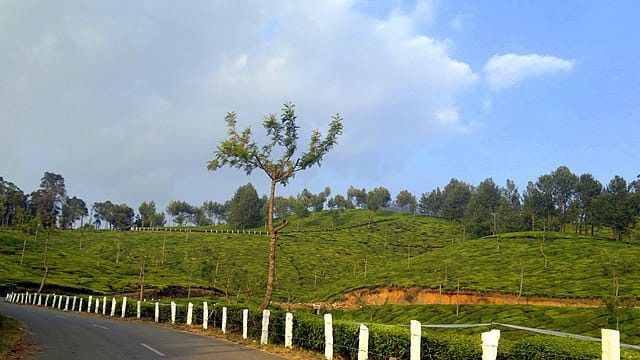
Don’t enter the estate rows without permission — it disrupts the harvest cycle and can damage plants. If a plantation worker stops to talk, slow down. These interactions are often the best part of the ride. Photography of workers is generally fine if they’re comfortable — ask with a gesture before pointing a lens. Don’t litter on plantation roads. Estate management takes this seriously, and several routes are being restricted by landowners due to tourist misuse.
Safety, Fitness Level, and Physical Preparation
Munnar’s terrain is genuinely hilly. Even the “easy” routes involve climbs. If your most recent cycling experience was a flat city commute, start with the Devikulam circuit and build from there.
Carry at least 1.5 liters of water. Roadside shops become sparse after the first 8–10 km on most routes. A light rain jacket is a good idea year-round — weather changes fast above 1,500 meters. Sunscreen matters even on overcast days.
If you’re cycling solo, download your route offline (Maps.me or OsmAnd work well for Kerala’s rural roads) and share your itinerary with your accommodation.
Quick-Reference: Frequently Asked Questions
Is cycling safe in Munnar for solo travelers? Yes, with basic precautions. The plantation roads have low traffic. Carry a charged phone, downloaded offline maps, and let someone know your route.
Can beginners cycle in Munnar? Yes — Routes 2 and 3 are accessible to moderately fit beginners. Avoid Top Station on a basic cycle.
Are guided cycling tours available in Munnar? Yes. Several local operators offer half-day and full-day guided rides, typically priced between ₹800–₹2,000 per person inclusive of cycle rental. This is a good option if it’s your first time navigating plantation roads.
What’s the best time of day to cycle in Munnar? 6:30–11 AM and 3–5:30 PM. Midday is too harsh in summer and too misty post-monsoon for good rides.
Final Thought: The Ride Worth Taking
Munnar by cycle is not about speed or distance covered. It’s about arriving at a switchback curve to find a row of tea bushes glowing orange in the 7 AM sun, watching a kingfisher dive at Mattupetty, and realizing that your legs ache in the exact right way.
In 2026, with more rental options, better route infrastructure, and growing local cycling culture, there hasn’t been a better time to swap the tourist van for two wheels.
Bring a good saddle, start early, and go slow enough to notice everything.

Sunil Singh is a travel writer and hill station explorer specialising in Kerala’s tea gardens, with years of firsthand experience visiting Munnar’s estates and plantations. Through Munnar Tea Gardens, he shares real-visit guides, honest reviews, and practical tips to help travellers plan smarter trips.