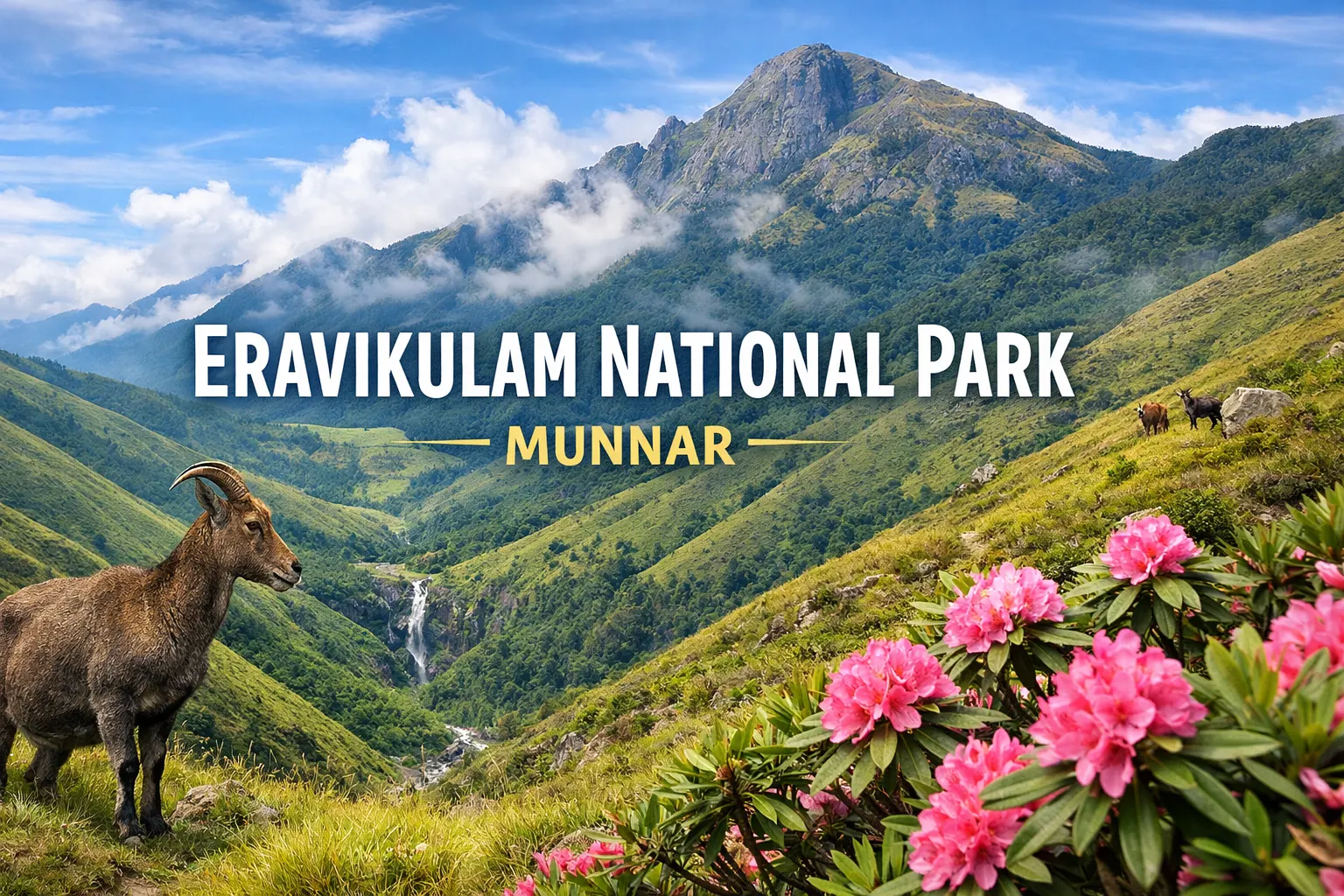
This isn’t your average wildlife sanctuary where you spend three hours and spot nothing. Eravikulam National Park in Munnar is one of India’s most accessible yet genuinely wild protected areas, sitting at over 2,000 metres above sea level in the Western Ghats of Kerala. And it’s home to the largest population of the critically endangered Nilgiri Tahr on the planet.
Whether you’re a wildlife photographer, a weekend trekker, or a family looking for a cool mountain escape from the heat, this guide covers everything you need to plan your 2026 visit — from the latest entry fees and timings to trekking routes and the best time to watch the park turn purple with Neelakurinji flowers.
What Makes Eravikulam National Park So Special?
Established in 1978, Eravikulam National Park spans 97 square kilometres of montane grasslands and shola forests in the Kannan Devan Hills. It’s a UNESCO World Heritage-nominated site (as part of the Western Ghats cluster) and has earned a global reputation for one particular reason: successfully pulling the Nilgiri Tahr back from the brink of extinction.
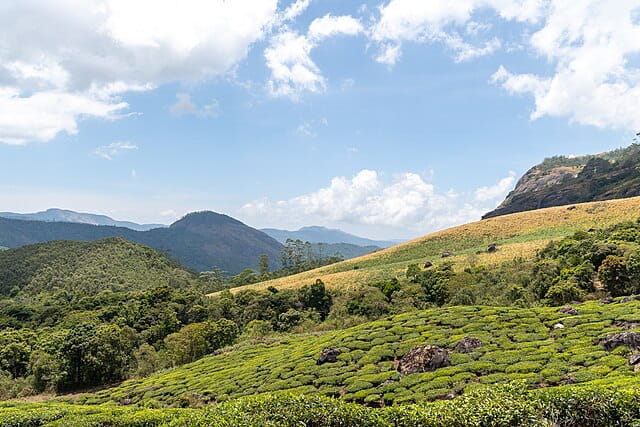
The park also holds the record for one of the most spectacular blooming events in nature — the flowering of Neelakurinji (Strobilanthes kunthiana), a shrub that blooms only once every 12 years, turning the hillsides entirely violet. The next bloom is expected in 2030, making now a perfect time to visit before the crowds descend in anticipation.
Biodiversity at a Glance
The park is home to over 26 species of mammals, including elephants, leopards, sambar deer, gaur, and the star attraction — the Nilgiri Tahr. Its avian population is equally impressive, with over 130 bird species recorded, including the endemic Nilgiri Pipit, the Black-and-orange Flycatcher, and Pied Thrush. The rolling shola-grassland mosaic supports an extraordinary density of endemic flora found nowhere else on Earth.
“Eravikulam is arguably the crown jewel of the Western Ghats in terms of accessibility to high-altitude endemic wildlife. You can observe the Nilgiri Tahr in genuinely wild conditions from just a few metres away — that level of proximity is extremely rare globally.”— Dr. Arun Zachariah, Wildlife Veterinarian, Kerala Forest Department.
Eravikulam National Park Entry Fee (2026)
The entry is managed by the Kerala Forest Department through a ticketed bus system — private vehicles are not allowed inside the core zone. You purchase your ticket at the base counter, and forest department buses ferry visitors to the main viewing area near the Rajamala grasslands.
Here are the current entry fees for 2026 (fees are subject to seasonal revision, so always verify at the park counter or the official Kerala Forest Department website before visiting):
| Category | Fee (Weekday) | Fee (Weekend / Holiday) |
|---|---|---|
| Indian Adult | ₹125 | ₹245 |
| Indian Child (5–12 yrs) | ₹65 | ₹110 |
| Foreign National Adult | ₹510 | ₹1,020 |
| Foreign National Child | ₹255 | ₹510 |
| Still Camera | ₹30 | ₹30 |
| Video Camera | ₹200 | ₹200 |
| DSLR / Professional Camera | ₹600 | ₹600 |
💡 Pro Tip: Buy Tickets Early
The park has a daily visitor cap, and on weekends and Kerala public holidays, tickets can sell out by 10 AM. Reach the ticket counter no later than 8 AM during peak season (October to March) to avoid disappointment. As of 2025, there is no official online booking portal — it’s all walk-in.
Is There an Online Booking Option?
As of early 2026, Eravikulam National Park does not offer advance online ticket booking through an official government portal. Third-party tour operators and Munnar-based travel agencies do offer bundled packages that include park entry, but you’ll pay a premium. The most reliable approach is to arrive early in person.
Park Timings and Seasonal Closure Dates
Eravikulam operates on a strict schedule, and unlike many Indian wildlife reserves, it actually enforces its closing time. Here’s what you need to know:
| Detail | Information |
|---|---|
| Opening Time | 7:30 AM |
| Last Entry | 3:00 PM |
| Closing Time | 4:00 PM |
| Days Open | All days (subject to seasonal closure) |
| Annual Closure | January to February (calving season) |
| Monsoon Advisory | Reduced access June – September |
The Annual Closure: Why the Park Shuts Every Year
This surprises many first-time visitors. Every year, usually from late January through early March, the park closes for roughly 45–60 days. This isn’t arbitrary — it’s timed precisely with the Nilgiri Tahr’s calving season. The does (females) come down to the lower slopes to give birth, and human presence during this critical period causes stress that directly affects newborn survival rates.
The closure has been a conservation masterstroke. Tahr population has grown from under 100 individuals in the 1970s to over 900 individuals today, largely credited to these annual disturbance-free windows. When planning your trip, always check the current closure dates — they shift slightly year to year.
⚠ Check Closure Dates Before Booking
In 2026, the annual closure is expected from approximately late January through mid-March. If you’re planning a February or March visit, call the Eravikulam Range Office at +91-4865-232377 or check the Kerala Forest Department website to confirm current status before booking transport and accommodation.
The Nilgiri Tahr: India’s Endangered Mountain Goat
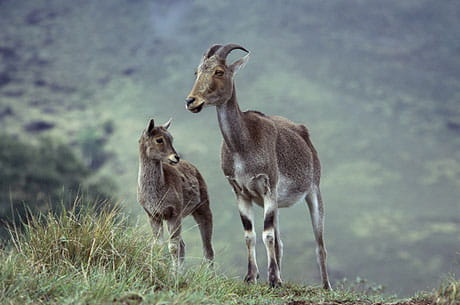
If the Nilgiri Tahr is the reason you’re visiting — and it should be — you’re in for something genuinely extraordinary. These are not shy, forest-dwelling animals. The Tahrs at Eravikulam have become remarkably habituated to human presence over decades, which means you’ll often find them grazing within 10–15 metres of the walkway, completely unperturbed.
Nilgiri Tahr: Quick Facts
- Scientific name: Nilgiritragus hylocrius — recently reclassified from the genus Hemitragus
- IUCN Status: Endangered (fewer than 3,000 individuals survive globally)
- Eravikulam population: ~900+ individuals — the largest single population in the world
- Distinctive features: Stocky build, dark colouration, saddle-shaped pale patch on mature males
- Preferred habitat: Rocky montane grasslands above 1,800 metres elevation
- Best viewing time: Early morning (7:30–9:30 AM) when herds graze near the walkway
Why Eravikulam Saved the Nilgiri Tahr
When the British Raj ended in 1947, unchecked hunting and habitat loss had pushed the Nilgiri Tahr to near-extinction. The declaration of Eravikulam as a wildlife sanctuary in 1975 and as a national park in 1978 gave the animals their legal shield.
Subsequent anti-poaching drives, the annual calving-season closure, and the removal of invasive wattle plantations from the core zone are all credited with the population’s dramatic recovery. Today, Eravikulam’s conservation model is cited in global biodiversity literature as a textbook example of mountain ungulate recovery.
Tips for Tahr Photography
The Tahrs are approachable, but respect their space. Here’s how to get the best shots without disturbing them:
- Arrive at opening time — the light is golden and the herds are closest to the trail
- Stay absolutely quiet when a herd is nearby — human voices are their main stress trigger
- A 70–200mm lens is ideal; anything longer is overkill given the proximity
- Feeding the animals is illegal and carries a fine — this is strictly enforced
- Look for the “saddle-back” males in the herd — their pale patches make for dramatic portraits
Trekking in Eravikulam National Park
The park offers more than a bus ride to a viewpoint. For those who want to go deeper, there are managed trekking options that take you into the shola forests and along the ridgelines of the Anamudi massif — the highest peak in South India at 2,695 metres.
Important Note on Trekking
Trekking inside the core zone of Eravikulam requires advance permission from the Divisional Forest Officer, Munnar. Most commercial treks operate in the buffer zones. The Anamudi Summit Trek specifically requires a special permit and is led only by certified forest guides. Do not attempt off-trail exploration without official permission.
1. Rajamala Walkway Trail
2.5 km loopEasyNo permit needed: 1–2 hours
This is the main accessible trail that all park visitors can walk. It’s a well-maintained paved and gravel path that loops through the open grasslands where Tahr herds graze. The trail offers unobstructed views of the Anamudi peak, the Kannan Devan hills, and on clear days — a stunning horizon of Western Ghats ridgelines. Perfect for families, casual walkers, and photographers.
2. Anamudi Summit Trek
18 km round tripDifficultSpecial permit required: Full day
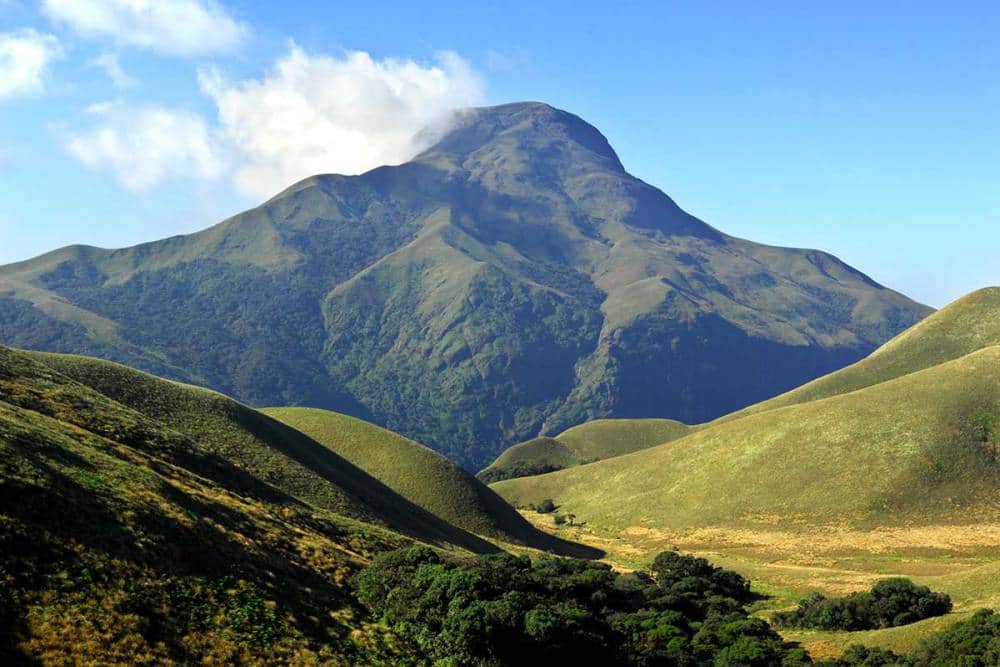
The summit of Anamudi (2,695 m) is the highest point in peninsular India and sits inside the park boundary. The trek is challenging — involving steep elevation gain through shola forest and open grasslands — but the summit views are unmatched. You’ll typically spot Nilgiri Tahrs, Sambar deer, and if lucky, Nilgiri Langur along the route. Permits are issued by the DFO office in Munnar and must be arranged at least 3 days in advance. Maximum group size is typically 10.
3. Lakkam Waterfalls Trail (Buffer Zone)
4 km round tripEasy–ModerateNo special permit: 2–3 hours
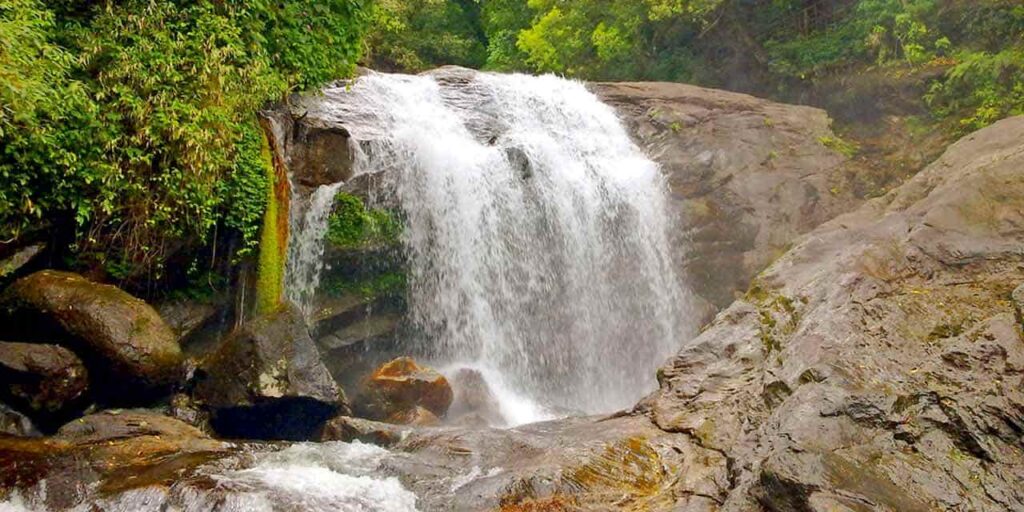
Located near the park’s periphery, the Lakkam Waterfalls trail passes through a mix of tea estate and forest edge. It’s less frequented, making it excellent for birding. The falls are most impressive from July to November. This trail is managed separately from the main park and has its own modest entry fee.
What to Carry for Trekking
- Water — at least 1.5 litres per person (no shops inside the park beyond the base area)
- Windproof jacket — even in summer, wind chill above 2,000 m can be severe
- Sturdy closed-toe shoes — the grasslands are uneven and often wet in the mornings
- Sunscreen and sunglasses — UV exposure at altitude is significantly higher
- Energy snacks — no food vendors inside the trekking zones
- Government-issued ID — mandatory for entry and permit applications
Best Time to Visit Eravikulam National Park
The park sits in a climatic sweet spot — it’s never truly hot (temperatures rarely exceed 20°C even in summer), but the monsoon brings heavy mist and poor visibility for long stretches. Here’s how the year breaks down:
October – December
Best Period
Post-monsoon clarity, rich green landscapes, active Tahr herds, excellent light for photography. Temperatures comfortable at 10–18°C.
January – Mid-February
Peak Season
Coolest months (can drop to 5°C at night), crystal-clear skies, highest Tahr activity. But the park may close from late January for calving season.
March – May
Shoulder Season
Warmer and drier. Crowds peak during school holidays. Good wildlife sightings but landscapes look drier and browner.
June – September
Monsoon Season
Southwest monsoon brings heavy rain and dense fog. Reduced access, slippery trails. Park may be partially open but visibility is poor.
The Neelakurinji Factor
The Neelakurinji (Strobilanthes kunthiana) blooms every 12 years, and the previous bloom was in 2018. The next bloom is expected in 2030. When it blooms, the entire hillside turns a deep violet-blue — it’s one of India’s most extraordinary natural spectacles. If you can plan a visit for October–November 2030, mark your calendar now. The 2018 bloom brought over 5 lakh visitors to the Munnar region.
How to Reach Eravikulam National Park
The park entrance at Rajamala is approximately 13 km from Munnar town. Here are your options:
By Road from Munnar
The most common approach. Auto-rickshaws charge around ₹300–400 one way. Taxis run ₹600–800 for a round trip with waiting time. Local KSRTC buses cover the route but run infrequently. Most hotels in Munnar can arrange drop-off and pick-up.
By Air (Nearest Airport)
Cochin International Airport (COK) is the nearest major airport, approximately 110 km from Munnar. The drive takes 3–3.5 hours via NH 85 through the scenic mountain road. Taxis are readily available from Cochin airport to Munnar (₹2,200–2,800).
By Rail (Nearest Station)
The closest railway station is Aluva (Ernakulam district), about 90 km from Munnar. From Aluva, hire a taxi or take a KSRTC bus to Munnar, then proceed to the park.
Important: Private Vehicles Not Permitted Inside
Private vehicles cannot enter beyond the ticket counter area. All visitors board forest department buses from the main parking area to the Rajamala grasslands. The bus ride itself is beautiful — about 15 minutes through tea estates and forest — and is included in the entry fee.
Read Also: 15 Best Things to Do in Munnar (2026 Travel Guide for First-Time Visitors)
Insider Tips for a Perfect Visit
Having spoken to frequent visitors, wildlife researchers, and Munnar-based guides, here are the tips that make the biggest difference to your experience:
- Arrive at opening time. The 7:30 AM slot is gold — herds are closest to the trail, the light is perfect, and crowds haven’t built up yet.
- Don’t rush. Budget at least 3 hours at the park. The grassland view from the upper ridge is worth the extra walk.
- Carry a light jacket even in summer. At 2,000+ metres, a cloud can move in and drop the temperature by 8°C in minutes.
- Avoid weekends in December and January if you can help it — these are genuinely overwhelming with domestic tourism, which affects wildlife behaviour near the trail.
- Watch for the “regular” Tahr near the gate. One or two habituated males often hang around very close to the main walkway start — great for photos and observation.
- Do not play music or use loudspeakers. Forest staff will ask you to stop, but beyond the rule, noise disturbs the grazing Tahrs significantly.
- Binoculars are worth bringing. The broader herd often grazes on the far slopes — 8×42 binoculars make a real difference for wildlife observation.
- Check the closure dates twice. Many visitors drive up from Cochin only to find the park closed for calving season. One phone call in advance can save your trip.
Frequently Asked Questions
Can I see the Nilgiri Tahr during my visit to Eravikulam?
Almost certainly yes — if the park is open. With a population of over 900 individuals and a small, defined grassland zone, Tahr sightings are nearly guaranteed on any open-season visit. Early morning is your best bet for close-range encounters.
Is the Anamudi Summit Trek open to all visitors?
No. The Anamudi Summit Trek requires a special permit from the Divisional Forest Officer in Munnar and must be done with an authorised forest guide. It’s not available as a walk-in activity. Apply at least 3 days in advance, and note that the trek is closed during the annual calving season closure.
When exactly does Eravikulam close every year?
The annual closure for the Nilgiri Tahr calving season typically runs from late January to mid-March, though the exact dates shift year to year based on the breeding cycle and Forest Department decisions. Always confirm dates directly with the Range Office before planning your visit.
Are there accommodation options inside the park?
There are no tourist accommodations inside the national park boundaries. All accommodation is in Munnar town or the surrounding tea estate resorts, from where you drive to Rajamala each morning.
Is Eravikulam safe to visit with young children?
Yes, it’s very family-friendly. The Rajamala walkway is paved and manageable for children and older adults. The Tahrs are habituated but remain wild — maintain a respectful distance and don’t allow children to approach or feed them. There are basic restroom facilities at the base counter area.
What is the difference between Rajamala and Eravikulam?
Rajamala is the name of the main visitor zone and the grassland area within Eravikulam National Park. When people say “Rajamala” or “Eravikulam,” they typically mean the same destination. The broader Eravikulam National Park includes the Anamudi massif and surrounding forest areas that are not accessible to general tourists.
Final Word: Worth Every Step
Eravikulam is one of those places that doesn’t care whether you’re a wildlife expert or a first-time national park visitor — it will show you something extraordinary. A Nilgiri Tahr standing calm against a backdrop of the Western Ghats. The rolling emerald grasslands meeting shola forest on the ridge. The cool, thin air at 2,000 metres that makes every breath feel different.
Plan early, check the closure dates, arrive at opening time, and carry that jacket. The rest, the park does for you.

Sunil Singh is a dedicated travel content writer and the founder of MunnarTeaGardens.in. He specializes in creating comprehensive, user-friendly guides on Munnar’s tea gardens, hill stations, and Kerala tourism. Drawing from the latest tourism trends, official sources, and visitor experiences, Sunil helps thousands of travelers plan safe and rewarding trips every year.