
Only in the hills can one find a specific kind of peace.
The kind where, when you wake up at 5:47 AM, all you can see outside your window is mist, dew, and the distant sound of tea pickers climbing a barely noticeable hill. You have a heavy blanket. The smell of rain on green plants fills the air. And the first pot of the day is already being made someplace below.
No travel guidebook has been able to accurately show the experience of spending the night on a Munnar tea farm.
If you’re planning a trip to Munnar, Kerala in 2026, this guide covers everything you genuinely need to know about staying inside a working tea estate: what to expect, what surprises you, what nobody warns you about, and how to make the most of every hour.
Why Staying on a Tea Estate Is Different From a Regular Hotel
Most visitors to Munnar check into a resort or a guesthouse on the edge of town and drive through the tea gardens between meals. It’s pleasant. But it’s not the same thing.
When you stay inside a working estate — one that still processes tea, still employs pickers, still has drying trays running in the factory — you’re not visiting a backdrop. You’re a guest in an ecosystem.
The estates that have opened their bungalows or converted plantation homes to guests are often former British-era planter residences. Some date back to the late 19th century. The walls have seen over a hundred monsoons. The fireplaces were built for a different climate, by people who missed home.
Staying here puts you in direct contact with:
- The rhythm of a farming operation that doesn’t pause for tourism
- Landscapes that change by the hour depending on cloud cover and wind
- A slower kind of hospitality — unhurried, often deeply personal
- Tea in quantities and varieties you won’t find at any café
This is not a luxury hotel experience dressed in rustic clothing. It’s something more real — and more interesting — than that.
How to Choose the Right Tea Estate Stay in Munnar
Understand What “Tea Estate Stay” Actually Means
There’s a wide spectrum here. On one end, you have restored colonial bungalows with butler service, four-poster beds, and candlelit dinners for two. On the other end, you have simpler homestays run by families who cultivate tea on a few acres and rent out a spare room with a beautiful view and excellent cooking.
Neither is better. They just serve different needs.
Questions to ask before booking:
- Is the estate still actively cultivating and processing tea, or is it a heritage property with no active farming?
- Is the accommodation inside the main bungalow, or in a separate guest cottage on the property?
- What meals are included, and are they using estate-grown produce?
- How far is the nearest town? (This matters more than you think at night.)
- Is there reliable mobile network or Wi-Fi? (Some estates have neither — which, depending on your purpose, is either the point or a dealbreaker.)
The Best Zones Within Munnar for Estate Stays
Munnar’s tea estates are spread across several distinct micro-regions, each with a slightly different character.
Chinnakanal sits at higher elevation and offers dramatic views across rolling green carpets of tea. It’s cooler here even in summer, and the mist rolls in reliably by late afternoon.
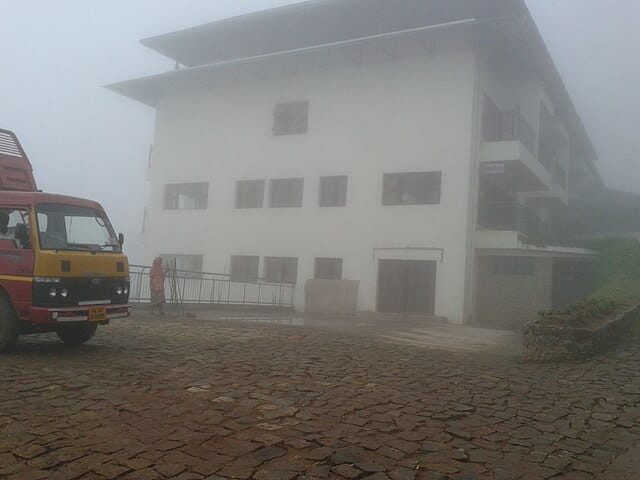
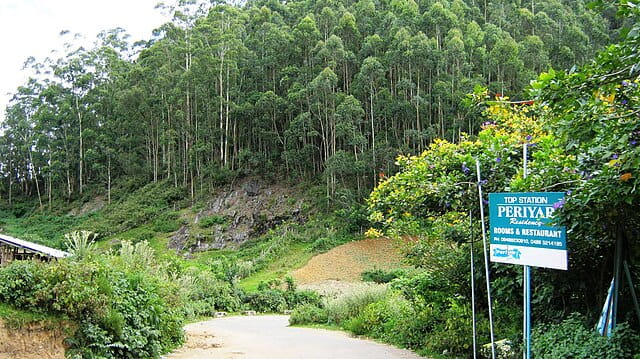
Top Station Road leads to some of the most photogenic estates in the district — perched along ridgelines with views that extend, on clear days, into Tamil Nadu.
Kolukumalai is for the serious enthusiast. At over 7,900 feet, it hosts the world’s highest tea estate. The roads to get there require a jeep, and the accommodation is basic — but the experience of waking at that altitude, surrounded by fields that shouldn’t logically exist, is something people describe for years afterward.
Lockhart Gap area offers a gentler, more accessible version of the estate experience, suited for families or first-timers who want the setting without the off-road logistics.

What Your First Evening Will Actually Look Like
You’ll likely arrive in the late afternoon. The golden hour in Munnar’s tea country is genuinely extraordinary — the low light catches the rows of tea bushes at an angle that makes the whole hillside look like corduroy.
Check-in at an estate bungalow isn’t the same as a hotel. Often, the caretaker or property manager will walk you around the grounds personally. They’ll show you the garden, point out which shrubs are ready for plucking, maybe explain the difference between what’s growing in front of you and what grows at the lower elevations.
If the estate has a functioning factory — even a small one — you may be able to visit before the light fades. The smell inside a tea processing unit is one of the more distinctive sensory experiences available to a traveler: earthy, slightly vegetal, with something warm underneath.
Dinner at most estate stays is served at a fixed time, in a dining room that often retains its original furnishings. Expect Kerala food done well — rice, sambar, thoran, fish curry if you’re near the right supplier, and always, always tea.
The evenings are cool. By 8 PM, you’ll want a layer.
The Morning: The Real Reason People Come Back
This is the non-negotiable part of the experience.
Set your alarm for somewhere between 5:00 and 6:00 AM. It will feel unnecessary until the moment you step outside.
In the early hours, the estate exists in a kind of suspended state. The pickers are already moving — quietly, efficiently, baskets on their backs, their hands working the rows in practiced arcs. The factory, if it runs a morning shift, will have started its first processing cycle. The mist hasn’t lifted yet.
Standing in the middle of a tea field as the day assembles itself around you is, without exaggeration, one of the more arresting things you can do in South India.
Most estate hosts will arrange an early morning tea tasting — fresh-brewed from that estate’s own harvest, sometimes within 48 hours of picking. The difference between this and commercial tea is not subtle. There’s a brightness, a greenness, a presence to it that’s difficult to explain without tasting it yourself.
What You’ll Learn (That You Didn’t Expect To)
Tea Plucking Is Skilled, Exhausting Work
Most visitors assume that the romantic image of a picker in a tea field is straightforward. Watch for ten minutes and you’ll revise that. An experienced plucker can harvest around 30 to 35 kilograms of leaves per day. They know exactly which two leaves and a bud to take, and which to leave. Their speed is the product of years of practice.

Estates that offer guided plucking experiences will often let you try. Most guests manage a kilogram in an hour, badly. It’s a humbling and clarifying activity.
The Factory Process Is Genuinely Fascinating
If you have even a passing interest in how things are made, a tea factory tour will hold your attention completely. The withering troughs where moisture is drawn from the leaves. The rolling machines that break the cell walls. The fermentation (oxidation) rooms where color and character develop. The final firing that locks the flavor in place.
Each stage changes the leaf. By the end, what began as something bright and green has become something amber and complex. The transformation, from field to cup, takes between 18 and 24 hours for most black teas.
The Colonial History Is Layered and Worth Reckoning With
The tea industry in Munnar was established by British planters — the Finlay family and their associated concerns were particularly significant — beginning in the 1880s. The bungalows you stay in were built for their managers. The labor systems that cleared the forests and planted the estates were extractive, often brutal, and brought workers from Tamil Nadu who form the majority of the estate community today.
Good hosts will address this history rather than paper over it. The best experience includes conversations, not just scenery.
Practical Details You Actually Need
Best Time to Visit
The post-monsoon months of September through November offer the most dramatic landscapes — the hills are saturated green, waterfalls are running, and the light has a particular clarity. October is often considered the sweet spot.
December through February brings cool, clear days and cold nights — perfect for sleeping, excellent for photography, and the most comfortable time to walk the estates.
March and April are drier and warmer. The estates look slightly less lush, but the crowds are thinner and prices are lower.
Avoid May–June, which is peak monsoon, and late December around the holidays, when Munnar can get genuinely overcrowded.
What to Pack
The essentials for an estate stay differ from a beach or city trip:
- A warm layer for evenings (even in summer, Munnar nights can drop to 10–12°C at higher elevations)
- Walking shoes or light trekking footwear — estate trails are not paved
- A rain jacket, regardless of the season
- A reusable water bottle
- Mosquito repellent for the early mornings and evenings
- Cash — many estate properties don’t have reliable card payment infrastructure
Getting There
Munnar is roughly 130 km from Kochi and 175 km from Coimbatore. Most travelers arrive by car or taxi, a journey of about 3.5 to 4.5 hours depending on traffic and route.
The nearest railway station is Aluva (Ernakulam district), from which you take a taxi up. No railway reaches Munnar itself.
A few estate stays offer pickup from Munnar town — worth asking at booking time.
Read Also: Cycling Through Munnar Tea Plantations: Routes, Rental Cost & What to Expect (2026)
Budget Expectations in 2026
Overnight estate stays in Munnar range from approximately:
- ₹3,500–₹6,000 per night for simple, heritage-adjacent homestays with meals
- ₹7,000–₹15,000 per night for restored colonial bungalows with full services
- ₹18,000 and above for premium, all-inclusive plantation experiences with dedicated staff and curated itineraries
Prices have risen moderately in recent years as demand for experiential travel in South India has grown. Booking 4–6 weeks in advance is advisable for the October–February window.
What Nobody Tells You (Honest Notes)
Connectivity is genuinely poor in some zones. This is a feature for many people and a frustration for others. Know which camp you’re in before booking.
The roads require patience. The mountain roads to and within some estates are narrow, winding, and not well-lit at night. If you’re driving yourself, take them slow and plan to arrive before dark.
Wildlife is present and real. Munnar’s tea estates border forest reserves. Elephant sightings are not uncommon, particularly in the early morning. Ask your host about any recent activity and follow their guidance on walking routes.
The silence after 9 PM can feel absolute. No traffic, no street noise, no ambient hum of a city. For some guests, this is the most profound part of the experience. For others, it takes adjustment.
Weather changes fast at altitude. You can have brilliant sunshine at 10 AM and thick cloud cover by noon. Embrace this rather than resist it.
Is an Overnight Tea Estate Stay Worth It?
Here is the honest answer: yes, if you approach it on its own terms.
It is not a resort. It will not have a pool or a spa menu or a DJ set. Room service may not be a concept that applies.
What it offers instead is rarer. You’ll understand tea differently — not as a beverage but as an agricultural act, a relationship between land and labor and time. You’ll see a landscape that most tourists drive past. You’ll eat food made by people who’ve been feeding guests for generations. You’ll sleep in rooms that have held a hundred years of monsoons and didn’t mind.
That’s worth more than a pool.
Final Checklist Before You Book
- Confirm whether the estate is still actively cultivating tea or is purely a heritage property
- Ask about the factory tour and early morning field walk — both should be included or available
- Check the cancellation policy (weather can affect plans in hill country)
- Ask what’s included: meals, transfers, guided activities
- Read recent guest reviews specifically for honest notes on road conditions and connectivity
- Book a minimum of two nights — one is never quite enough

Sunil Singh is a dedicated travel content writer and the founder of MunnarTeaGardens.in. He specializes in creating comprehensive, user-friendly guides on Munnar’s tea gardens, hill stations, and Kerala tourism. Drawing from the latest tourism trends, official sources, and visitor experiences, Sunil helps thousands of travelers plan safe and rewarding trips every year.