There’s a moment — usually somewhere between the first sip of hot chai on a houseboat at dawn and the distant call of a hornbill in a misty forest — when Kerala stops being a destination and starts being an experience you didn’t know you needed.
Kerala, fondly called “God’s Own Country,” is one of India’s most visited states for a reason. With over 21 million domestic and international tourists visiting annually (Kerala Tourism statistics, 2024), it consistently ranks among Asia’s top sustainable tourism destinations. It’s the kind of place that rewards slow travel.
If you’re visiting for the first time in 2026, this guide will cut through the noise. No fluff, no recycled listicles — just honest, experience-backed advice on the 20 best places to visit in Kerala, what makes each one special, and how to make the most of your time there.
📌 Quick Fact: Kerala covers 38,852 sq km and packs within it 44 rivers, the Western Ghats, the Arabian Sea coastline, and some of the world’s most biodiverse forest cover.
Why Kerala Should Be Your Next Travel Destination in 2026
Let’s be honest — most people have heard of Kerala. But first-timers often underestimate how diverse it really is. This isn’t just backwaters and elephants (though both are extraordinary). Kerala offers an almost overwhelming variety: misty mountain tea gardens, ancient temples, surf-ready beaches, Ayurvedic wellness retreats, and cuisine that’ll ruin you for anything else.
According to the Kerala Tourism Development Corporation (KTDC), the state recorded a 17% jump in footfall from international tourists in 2024, particularly from the UK, Germany, the US, and Australia. For 2026, sustainability-focused tourism is at the heart of new state policies, making it an even more meaningful time to visit.
And unlike more commercialized destinations in India, Kerala retains its soul. Local families still run most homestays. Village toddy shops still serve fresh coconut wine. The fish is still fresh because someone pulled it out of the sea three hours ago.
Top 20 Kerala Tourism Places to Visit in 2026
1. Alleppey (Alappuzha) — The Backwater Capital of India
If you visit only one place in Kerala, make it Alleppey. The vast network of backwaters — canals, lakes, rivers, and lagoons — stretches over 900 km across the state, and Alleppey is the gateway to all of it.
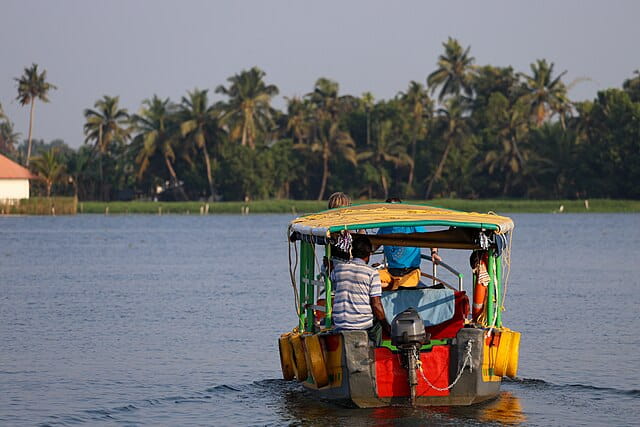
The iconic kettuvallam (traditional rice boats now converted to houseboats) let you drift past paddy fields, coconut groves, and tiny island villages. You’ll wake up to the sound of water. You’ll fall asleep to frogs and fireflies. It’s genuinely one of those travel moments that people describe as “life-changing.”
Best For: Families, couples, solo travelers seeking calm. Book a houseboat for at least one night.
✅ Pro Tip: Book houseboats directly with KTDC or certified operators to avoid tourist traps. Off-season (June-August) rates are 40% cheaper and the rains make it magical.
2. Munnar — The Emerald Hills of Kerala
Munnar sits at around 1,600 metres above sea level in the Western Ghats, and the drive up is half the experience. The moment the temperature drops and you catch the first whiff of fresh tea leaves on cool mountain air, you’ll understand why Munnar has inspired poets, photographers, and peaceful lunatics for over a century.
The tea estates here, managed largely by Tata Tea and private plantations, stretch across 80,000 hectares. The landscape is best described as a green quilt thrown over the mountains. In January and February, the rare Neelakurinji flower blooms in shades of purple-blue — a phenomenon that happens only once every 12 years (next expected in 2030).
Best For: Trekking, photography, honeymoon couples, bird watching, tea plantation walks.
📌 Quick Fact: Eravikulam National Park near Munnar is home to the critically endangered Nilgiri Tahr — a wild mountain goat found nowhere else on earth.
3. Varkala — The Cliffside Beach Town
Varkala is where Kerala’s beach culture feels most genuine. Unlike the more commercial Kovalam, Varkala’s beaches sit below dramatic red laterite cliffs — and the clifftop promenade lined with yoga shacks, Ayurvedic massage parlors, and restaurants with sunset views has made it a cult favorite among long-term travelers.
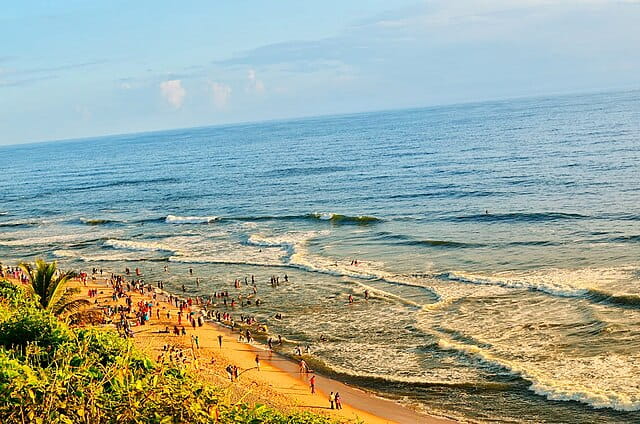
Papanasam Beach is considered sacred by Hindus, and you’ll often see pilgrims performing rituals at the shoreline while tourists swim 200 metres away. That coexistence is very Kerala — ancient and modern, sacred and secular, all at once.
Best For: Backpackers, yoga lovers, those wanting beach calm without resort-level prices.
4. Wayanad — Where Forests Come Alive
Ask any Keralite what their favourite weekend escape is, and most will say Wayanad. This plateau district in northern Kerala is wrapped in forests, spice plantations, and tribal heritage. It’s one of the few places in India where you can visit a coffee estate in the morning, spot wild elephants in the afternoon, and eat the best bamboo rice biryani of your life by evening.
Edakkal Caves — featuring Neolithic-era carvings dating back over 3,000 years — are a must-visit. So is Chembra Peak, the highest in Wayanad at 2,100 metres, famous for its heart-shaped lake near the summit.
Best For: Nature lovers, trekkers, history buffs, families with older kids.
✅ Pro Tip: Visit Wayanad in September-October for the post-monsoon green explosion. Mist, waterfalls, and jungle freshness.
5. Thekkady (Periyar) — Wildlife at Its Wild Best
Periyar Tiger Reserve in Thekkady is one of India’s most successful conservation stories. Spread over 777 sq km, the reserve is home to tigers, leopards, Indian elephants, gaur, and over 250 species of birds.
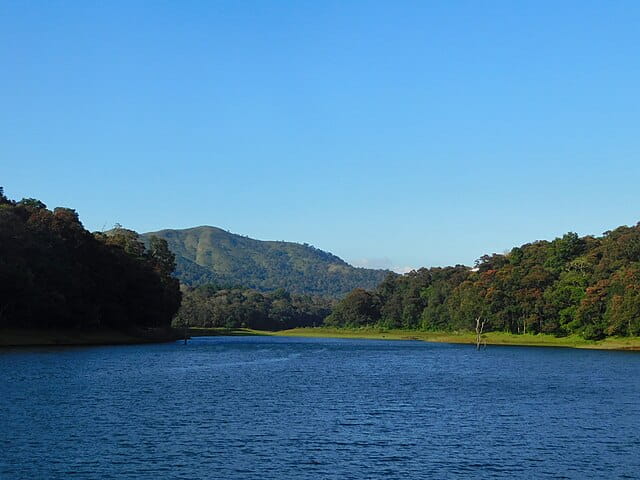
The boat ride on Periyar Lake — calm, silent, and utterly cinematic — sometimes puts you metres away from herds of elephants coming to drink at the water’s edge. A bamboo rafting experience through forest streams takes things up a notch.
Best For: Wildlife enthusiasts, photographers, sustainable tourism advocates.
📌 Quick Fact: Thekkady is also the spice capital of Kerala. You can buy high-quality cardamom, pepper, cloves, and cinnamon directly from plantation owners at fair prices.
6. Kovalam — The Classic Beach Destination
Kovalam is probably Kerala’s most internationally known beach town, shaped since the 1970s by backpacker culture and later by upscale resorts. The crescent-shaped Lighthouse Beach is the most popular — blue-flag certified, relatively clean, and lined with seafood shacks where you can pick your own fresh catch and have it grilled while you watch the sunset.
It’s more commercialized than Varkala, but it also has better infrastructure, more Ayurveda resort options, and a livelier nighttime scene. First-timers who want convenience often prefer Kovalam.
Best For: Beach relaxation, Ayurvedic treatments, international travelers who want comfort.
7. Thrissur — The Cultural Capital
Thrissur is where Kerala’s soul lives. No other city captures the state’s cultural depth as powerfully as Thrissur, best known for hosting the Thrissur Pooram — widely considered the most spectacular temple festival in the world.
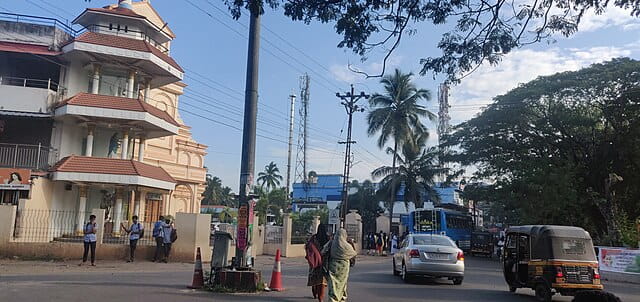
Every April-May, dozens of elaborately caparisoned elephants gather at the Vadakkunnathan Temple, accompanied by percussion orchestras of 200+ musicians. The sound, sight, and sheer scale of it are overwhelming in the best possible way. In 2026, Pooram falls in May — highly recommended if your dates align.
Best For: Culture seekers, festival lovers, art and history enthusiasts.
8. Fort Kochi — History, Art, and Spiced Air
Kochi (Cochin) was the first city in India to be colonized by Europeans, and Fort Kochi preserves that layered history like nowhere else. Portuguese churches, Dutch palaces, Jewish synagogues, Chinese fishing nets, and mosques all exist within a few square kilometers.
The famous Chinese fishing nets at the seafront — believed to have been introduced by traders from the court of Kublai Khan — are now one of India’s most photographed images. The Biennale, held every two years in Fort Kochi, has turned the area into a globally recognized contemporary art hub.
Best For: History lovers, art enthusiasts, solo travelers, food explorers.
✅ Pro Tip: Walk the streets of Fort Kochi in the early morning before the tour groups arrive. The antique shops, spice warehouses, and old colonial facades are best experienced in quiet.
9. Kozhikode (Calicut) — The City of Spice Routes
Kozhikode was the capital of the powerful Zamorin kingdom and was the city where Vasco da Gama first landed in India in 1498. Today, it’s a food lover’s paradise. Kozhikode is the birthplace of Kerala’s most beloved dish — Kozhikodan Biryani — and the city’s beach road halwa shops are legendary across South India.
The city also offers a fascinating mix of Malabar Muslim heritage, colonial architecture, and a thriving literary culture — Kozhikode has produced more Malayalam literary giants than almost any other city.
Best For: Food tourism, history, cultural immersion, solo travelers.
10. Thrissur to Kannur — The Theyyam Coast
Kannur in northern Kerala is the home of Theyyam — one of India’s most powerful and visually arresting ritual art forms. Performers in elaborate costumes and face paint embody deities, entering trance states as communities gather in firelit outdoor shrines.
Theyyam season runs primarily from November to April. Unlike ticketed performances, these are living rituals — open to respectful visitors. Witnessing one is an experience that changes how you think about performance, devotion, and the human body.
Best For: Cultural depth-seekers, documentary lovers, travelers with flexibility to go off the beaten path.
11. Bekal Fort — The Instagram-Famous Clifftop Fort
Bekal Fort in Kasaragod is the largest and best-preserved fort in Kerala, built in the 17th century. Its distinctive keyhole-shaped observation tower rises dramatically above the Arabian Sea, offering sweeping 270-degree views. It became internationally famous after appearing in the Bollywood film Bombay (1995).
The fort’s surroundings include a beautiful beach and quiet backwaters — making the Bekal-Kasaragod corridor one of Kerala’s most underrated destinations.
Best For: History, beach walks, photography, road trippers driving Kerala’s coastal highway.
12. Athirappilly — The Niagara of India
Athirappilly Falls in Thrissur district is Kerala’s largest waterfall, dropping 24 metres into a wide, forested gorge. It’s been featured in over 30 Indian films and is considered one of the most photogenic natural sights in South India.
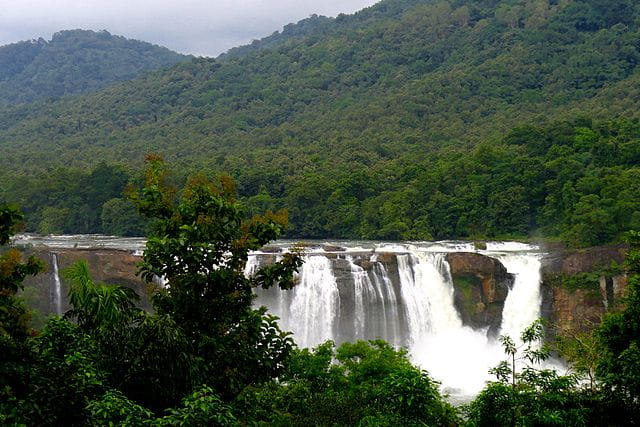
What makes Athirappilly special isn’t just the waterfall — it’s the surrounding Sholayar forest, which forms a critical wildlife corridor between Parambikulam and Eravikulam reserves. Elephants, hornbills, and lion-tailed macaques are commonly spotted on the forest trail leading to the falls.
Best For: Nature lovers, photographers, day-trippers from Kochi.
📌 Quick Fact: The Chalakudy River below Athirappilly is home to 85 species of freshwater fish — 29 of which are endemic to the Western Ghats.
13. Kumarakom — Bird Watcher’s Paradise
Kumarakom on the banks of Vembanad Lake — Kerala’s largest lake — is a destination for those who want the backwater experience with a focus on ecology and bird watching. The Kumarakom Bird Sanctuary draws thousands of migratory birds each winter, including Siberian storks, teals, and cormorants.
The luxury resort scene here is excellent, with properties literally floating on the lake. But budget travelers can also find good homestays in nearby villages.
Best For: Bird watchers, nature photographers, luxury travel seekers, honeymooners.
14. Ponmudi — The Forgotten Hill Station
Just 61 km from Thiruvananthapuram, Ponmudi is one of Kerala’s least-visited but most beautiful hill stations. The winding 22-km mountain road with over 22 hairpin bends is itself an experience. At the top, you’ll find a quiet hill station with no crowds, excellent trekking trails, and a butterfly biodiversity that has made it a hotspot for entomologists.
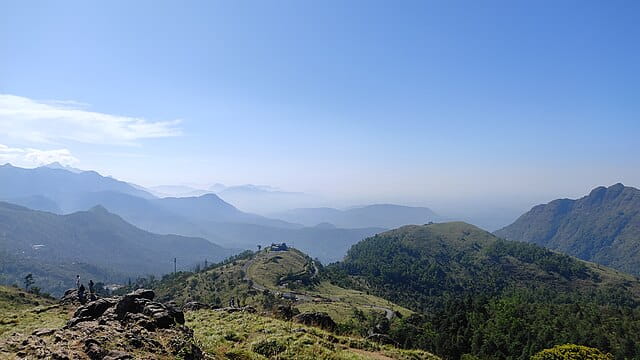
Golden Valley near Ponmudi is a meadow ringed by forests where deer graze openly. This is “slow Kerala” at its finest.
Best For: Trekkers, nature photographers, travelers escaping the tourist trail.
✅ Pro Tip: Ponmudi is ideal for weekend travelers based in Thiruvananthapuram. Pack a jacket — temperatures can drop sharply at night even in summer.
15. Marari Beach — The Quiet Fishing Village Experience
Marari, near Alappuzha, is often described as what Kovalam and Varkala were before tourism took over — a long, uncrowded beach backed by fishing villages, coconut trees, and absolute quiet. It’s one of the few places on Kerala’s coast where you’ll genuinely share the beach mostly with fishermen hauling nets at dawn.
The luxury eco-resort Marari Beach Resort by CGH Earth pioneered sustainable coastal hospitality here and is still one of the best-rated properties in South India.
Best For: Those seeking peace, luxury eco-travel, couples, digital detoxers.
16. Palakkad — The Gateway to the Ghats
Palakkad is the “granary of Kerala,” a lush agricultural district where the Western Ghats open up into a broad valley. It’s home to Palakkad Fort (built by Hyder Ali of Mysore), the fascinating Malampuzha Garden and Dam, and some of the most beautiful waterfalls in the region including Dhoni Falls.
Nelliyampathy, a small hill station in Palakkad district, produces some of the finest cardamom and tea in Kerala and offers trekking with almost no tourist infrastructure — a rarity in 2026.
Best For: Off-beat explorers, history lovers, agricultural tourism seekers.
17. Thiruvananthapuram (Trivandrum) — The Regal Capital
Kerala’s capital is often skipped by tourists rushing north to Varkala or south to Kovalam — which is a mistake. Trivandrum has the Padmanabhaswamy Temple, one of the world’s wealthiest temples (discovered gold vault estimated at over $20 billion), a beautiful colonial-era museum district, and the Napier Museum — a stunning Gothic-Moorish structure from 1880.
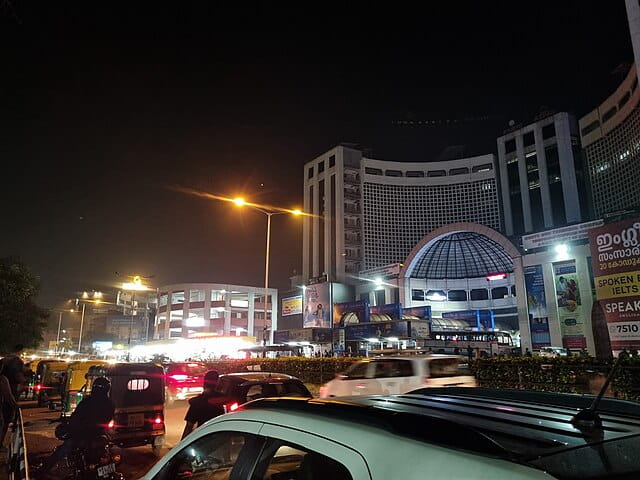
The zoo here is considered one of the best-maintained in India. And the city’s street food scene — especially the string hoppers and fish curry along Chalai Bazaar — is exceptional.
Best For: History, temple culture, urban food explorers, transit hub for beach and hill treks.
18. Vagamon — The Scottish Highlands of Kerala
Vagamon is a plateau hill station straddling the boundary between Idukki and Kottayam districts. It doesn’t get as much attention as Munnar or Wayanad, but those who find it tend to keep coming back. Rolling meadows, pine forests, and misty valleys have earned it comparisons to the Scottish Highlands.
Paragliding is popular here, and Vagamon is one of the few places in South India where the conditions support it reliably. The Kurisumala Ashram — a Christian monastery perched above the valley — offers a rare space of spiritual quiet.
Best For: Adventure seekers, spiritual travelers, couples, off-season monsoon visitors.
📌 Quick Fact: Vagamon remains one of the few hill stations in Kerala that has actively resisted large resort development, preserving its rural character.
19. Padmanabhapuram Palace — A Window into Royal Kerala
Technically just inside Tamil Nadu’s border but administered by the Kerala government, the Padmanabhapuram Palace in Thuckalay is the finest example of Kerala’s traditional royal architecture. Built in the 16th century and expanded over the next 200 years, the wooden palace complex uses no nails — every beam, panel, and bracket interlocks.
The murals on the walls, the carved rosewood screen, the intricately latticed windows — all of it tells you something profound about the artistic sophistication of pre-colonial Kerala. It’s a UNESCO candidate and one of the most underrated historical sites in South India.
Best For: History and architecture enthusiasts, families, travelers combining Kerala and Tamil Nadu.
20. Silent Valley National Park — The Last Rainforest
Silent Valley is Kerala’s most pristine and protected ecosystem — a UNESCO Biosphere Reserve and one of the last undisturbed tropical rainforests in Asia. Entry is strictly regulated, which means it hasn’t been overrun by tourist infrastructure.
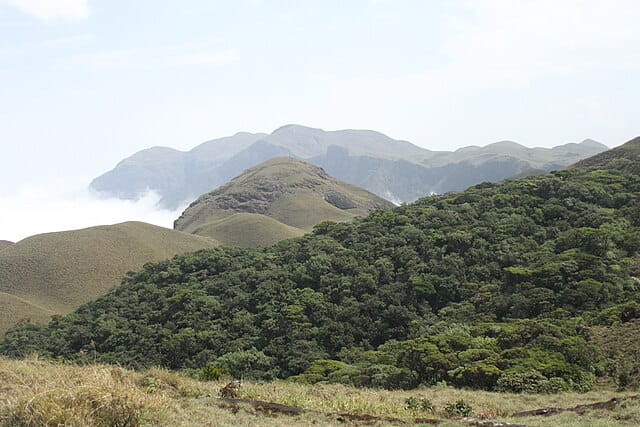
Lion-tailed macaques, the park’s flagship species, are found here in one of their last healthy wild populations. The park gets its name from the absence of cicada sounds — a biological peculiarity scientists still debate.
Visiting Silent Valley requires advance permission from the Forest Department, but the effort is absolutely worth it for serious naturalists and eco-tourists.
Best For: Naturalists, wildlife researchers, eco-tourists, serious trekkers.
Best Time to Visit Kerala in 2026
Kerala has three distinct travel seasons, each with its own character:
- October to February — The peak season. Cool, dry, and ideal for beaches, backwaters, and hill stations. Book early; prices are highest.
- March to May — Pre-monsoon heat. Great for festivals, waterfalls beginning to swell, fewer tourists. Budget-friendly.
- June to September — Monsoon season. The Western Ghats receive some of the heaviest rainfall in Asia. Rivers swell, waterfalls thunder, forests go electric green. This is the season for Ayurvedic treatments (the cool, moist air is considered ideal for therapies).
✅ Pro Tip: If you have the flexibility, consider the shoulder months of September-October or February-March — you get the best weather with fewer crowds and softer prices.
How to Reach Kerala
Kerala has three international airports: Thiruvananthapuram (Trivandrum), Kochi (Cochin), and Kozhikode (Calicut). Kochi is the best-connected hub for most international travelers, with direct flights from Dubai, Singapore, London, and other major hubs.
Within Kerala, the Kerala SRTC operates a reliable inter-city bus network. Train travel is excellent along the coastal route — the Shoranur-Mangalore line passes through beach towns and is one of the most scenic train journeys in India. For hill stations like Wayanad and Munnar, renting a car or hiring a local driver is the most practical option.
What to Eat: A First-Timer’s Kerala Food Guide
You haven’t visited Kerala until you’ve eaten properly. This is a state where food is a cultural event, not a convenience.
- Kerala Sadhya — A traditional vegetarian feast served on a banana leaf with 25+ dishes. Mandatory on Onam.
- Karimeen Pollichathu — Pearl spot fish marinated in spices and roasted in a banana leaf. A Kuttanad specialty.
- Puttu and Kadala Curry — Steamed rice cylinders with black chickpea gravy. The most common breakfast in the state.
- Malabar Biryani — Kozhikode’s fragrant, lightly spiced rice dish with tender meat, unlike any biryani you’ll have elsewhere.
- Pazham Pori — Banana fritters fried in a light batter. Street food perfection.
📌 Quick Fact: Kerala’s cuisine uses coconut in over 200 forms — coconut oil, coconut milk, grated coconut, coconut vinegar, and coconut toddy among them.
Essential Kerala Travel Tips for First-Timers
Respect Local Customs
Kerala is deeply traditional beneath its modern exterior. Remove footwear before entering temples and homes. Dress modestly at religious sites. Ask before photographing rituals.
Carry Cash in Rural Areas
Digital payments work in cities and tourist hubs, but remote villages and forest routes often operate on cash only. Keep small denominations.
Download Offline Maps
Mobile data can be unreliable in the Western Ghats and dense forest zones. Download offline maps via Google Maps or Maps.me before you leave your hotel.
Book Houseboats in Advance
Peak season (December-January) sees houseboats fully booked weeks ahead. Secure your booking before leaving home.
Watch for Wildlife on Night Roads
Roads through Wayanad, Thekkady, and Silent Valley are active wildlife corridors. Drive carefully after dark — elephant crossings are genuinely common and potentially dangerous.
✅ Pro Tip: Kerala’s emergency services number is 112. For Kerala Tourism helpline, call 1800-425-4747 (toll-free within India).
Final Thoughts: Your Kerala Journey Starts Here
Kerala is the kind of place that doesn’t just end when your flight leaves. Months later, you’ll find yourself craving the smell of fresh coconut oil on morning fish, the sound of rain on a houseboat roof, or the sight of an elephant emerging from early morning mist on a forest road.
Whether you have four days or four weeks, Kerala will give you more than you expect. Start with the classics — Alleppey, Munnar, Fort Kochi — then let your curiosity take you deeper. The real magic lives just past the tourist trail.
The 20 places in this guide are your starting points, not your limits. Kerala rewards the unhurried, the curious, and the willing. In 2026, more than ever, it’s a destination that deserves to be experienced rather than just seen.
Safe travels — and Namaskaram from God’s Own Country.
Read Also: Kerala 7-Day Trip Itinerary: Munnar, Thekkady, Alleppey & Kovalam (2026 Guide)
Sunil Singh is a dedicated travel content writer and the founder of MunnarTeaGardens.in. He specializes in creating comprehensive, user-friendly guides on Munnar’s tea gardens, hill stations, and Kerala tourism. Drawing from the latest tourism trends, official sources, and visitor experiences, Sunil helps thousands of travelers plan safe and rewarding trips every year.