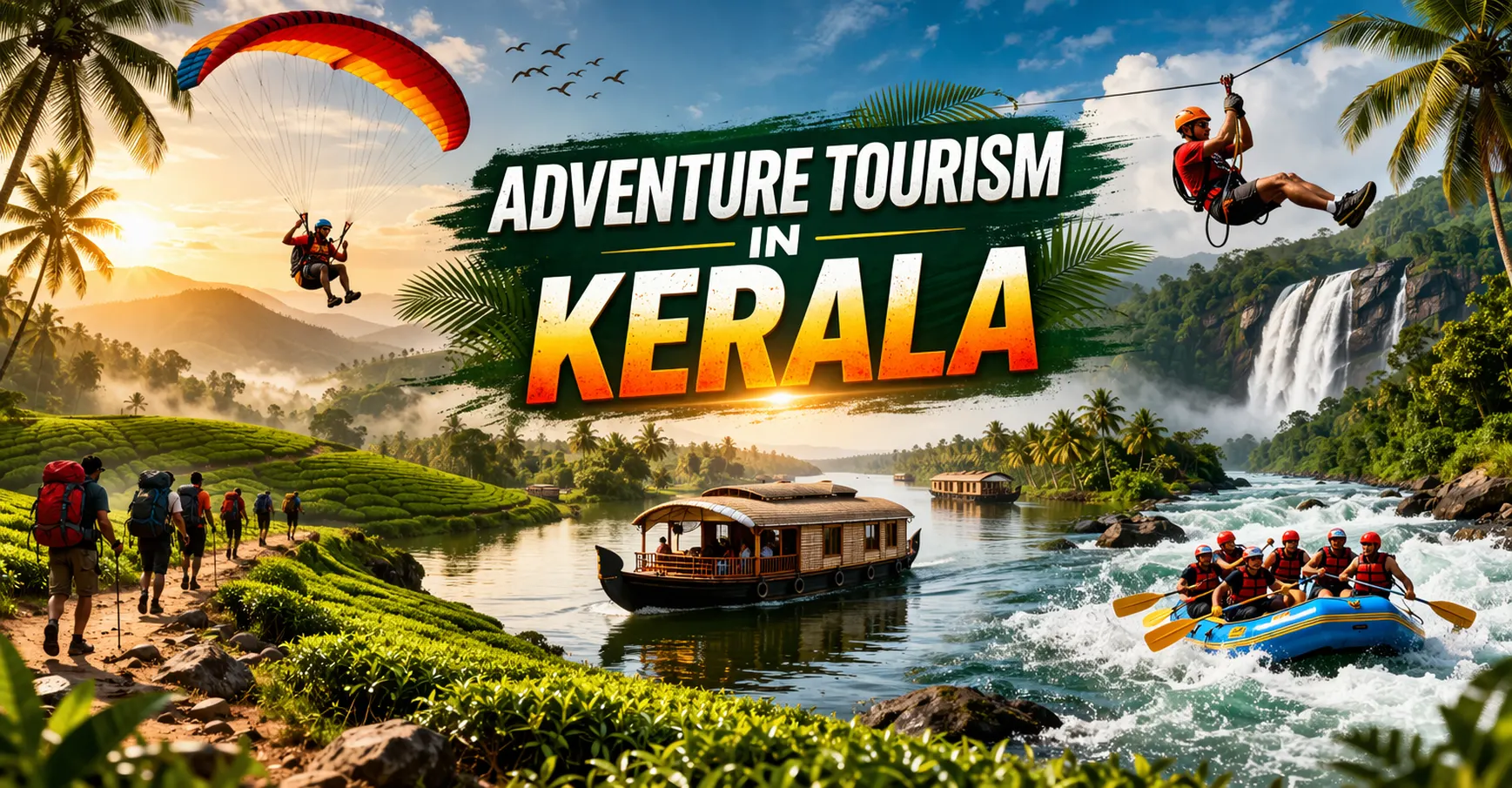
Kerala doesn’t play by the rules of a typical holiday.
While most visitors come for the backwaters and Ayurvedic massages — and those are wonderful, truly — there’s an entirely different Kerala waiting for you once you step off the houseboat and look up at the hills. A Kerala of misty peaks, rushing white-water rivers, thick jungle canopies, and trails that wind through tea estates so green they don’t look real.
If you’ve never tried adventure travel before, Kerala might just be the perfect place to start. The terrain is forgiving, the infrastructure is surprisingly well-developed, and the locals are warm enough to make even a nervous first-timer feel at ease.
Here’s everything a beginner needs to know about adventure tourism in Kerala in 2026.
Why Kerala Is Perfect for First-Time Adventure Travelers
Kerala occupies a uniquely geography-blessed position in India. On one side, the Arabian Sea. On the other, the Western Ghats — one of the world’s eight biodiversity hotspots, according to UNESCO. In between, a landscape of rivers, forests, spice plantations, and rolling hill stations.
This variety means beginners don’t have to start at the deep end. You can ease into adventure through a gentle bamboo rafting session on the Periyar river before working your way up to more challenging multi-day treks. There’s a natural learning curve built into the destination itself.
The state government has also invested heavily in responsible adventure tourism over the past decade. Most operators now work under Kerala Tourism’s certified eco-tourism frameworks, which means your guide has been trained, your safety equipment has been inspected, and the activity you’re paying for has been assessed for risk.
Top Beginner-Friendly Adventure Activities in Kerala (2026)
1. Trekking in Munnar — Where to Start Without Feeling Lost
Munnar is the most accessible hill destination in Kerala, sitting about 130 km from Kochi, and it’s an ideal starting point for beginner trekkers.
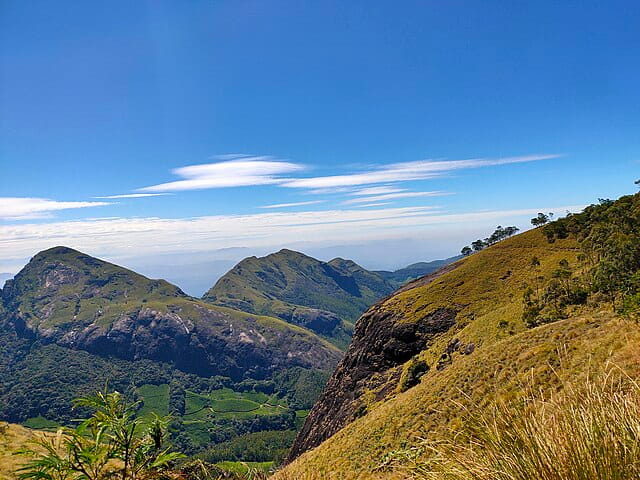
The Meesapulimala Trek is one of South India’s highest peaks at 2,640 meters and sounds intimidating — but it’s graded as moderate difficulty, making it achievable for anyone with basic fitness. Guided tours are available from Rhodo Valley, and permits are managed by the Kerala Forest Department, ensuring trails don’t get overcrowded.
If you want something even more approachable, the Chembra Peak Trek near Wayanad is one of the most popular in the region. At around 2,100 meters, it features the famous heart-shaped lake (Hridaya Thadakam) about two-thirds of the way up. Most beginners complete it in 4–5 hours round trip.
Beginner tip: Always hire a licensed local guide. Beyond safety, they offer context — about the shola forests, the Nilgiri biosphere, the tribal communities who’ve lived here for generations. It transforms a walk into an experience.
2. White-Water Rafting on the Barapole River
The Barapole River in Wayanad has quietly become one of South India’s premier rafting destinations. During the post-monsoon season (September to February), it offers Class II and Class III rapids — the international standard for beginner to intermediate rafting.
What makes Barapole particularly suited for first-timers is the controlled environment. Operators run safety briefings before every session, all participants wear helmets and life vests, and guides paddle alongside your raft for the entire stretch. The roughly 8-km run takes about 90 minutes and costs approximately ₹800–₹1,500 per person depending on the operator.
A common question from first-timers: Do I need to know how to swim?
Not necessarily — but it helps with confidence. Your life vest will keep you afloat if you fall in. More importantly, listen carefully during the safety briefing. The instructors at certified centers like Wayanad Adventure Zone or Coorg Rafting Camps aren’t just going through the motions. That briefing genuinely matters.
3. Bamboo Rafting in Periyar — Slow Adventure Done Right
Not every adventure has to come with an adrenaline spike.
The Periyar Tiger Reserve offers guided bamboo rafting trips through the core forest zone — a serene, meditative experience that happens to put you within eyeshot of wild elephants, bison, and sometimes, if you’re very lucky, tigers along the riverbank.
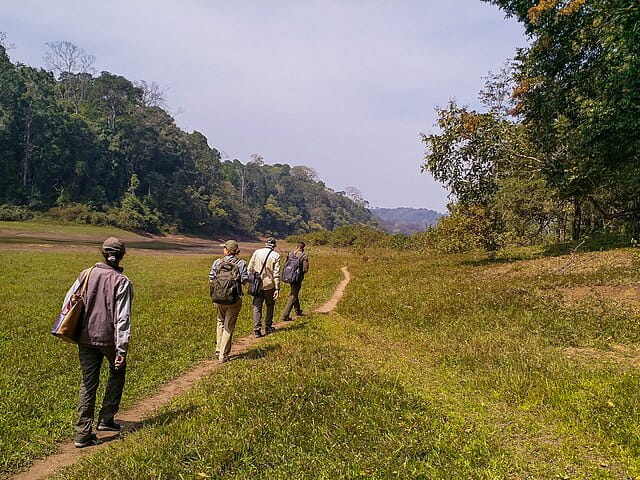
These trips are run by the Kerala Forest Department’s eco-tourism initiative and are tightly controlled. Batch sizes are small (typically 8–12 people), and the rafts move silently through the water. The “adventure” here is entirely about encounter — with wildlife, with silence, with a forest that clearly doesn’t care about your schedule.
For beginners especially, this is a beautiful way to develop comfort with Kerala’s wild spaces before trying more physically demanding activities.
4. Rock Climbing and Rappelling at Vagamon
Vagamon — a quiet hill station between Kottayam and Idukki — doesn’t get the attention it deserves.
It’s known locally for its three hills (Thangal, Murugan, and Kurisumala), its paragliding opportunities, and increasingly for rock climbing. The basalt rock faces here are well-suited to beginner climbers, with natural grips and relatively low angle ascents for introductory routes.
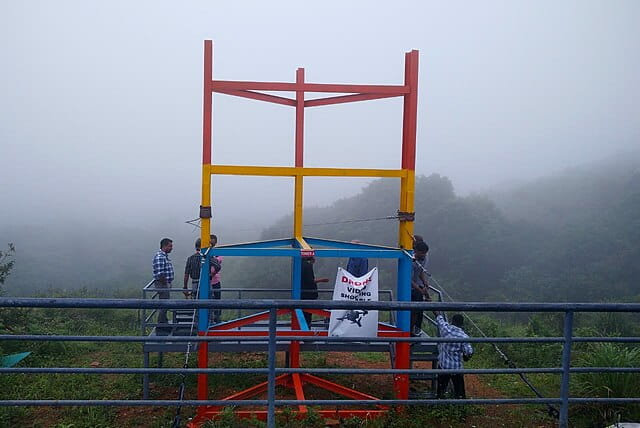
Rappelling (or abseiling) is another activity offered at multiple operators near Vagamon and in Wayanad. It involves descending a rock face or waterfall using a rope and harness — and despite how it looks in videos, it’s genuinely beginner-safe when operated with proper equipment and supervision.
Most beginner rappelling experiences in Kerala cost between ₹500 and ₹1,200 and take about 30–45 minutes including the safety demonstration.
5. Jungle Camping and Night Safaris in Wayanad
Wayanad Wildlife Sanctuary offers something most adventure destinations can’t: the experience of spending a night inside India’s second-largest tiger reserve.
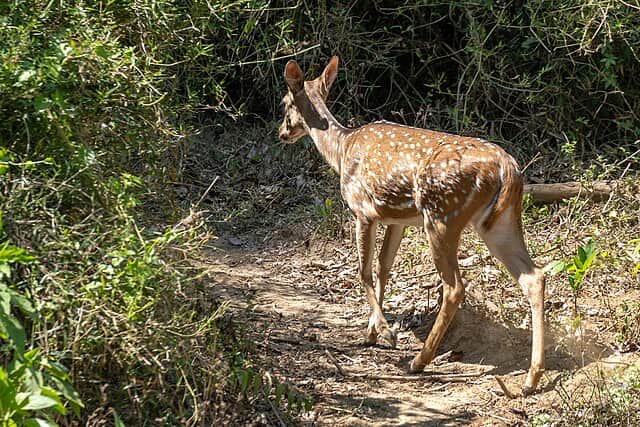
Eco-tourism-approved jungle camps near Muthanga and Tholpetty zones offer guided night safaris where you travel in open jeeps after dusk. You might see leopards, barking deer, spotted owls, or the enormous Asian elephant herds that Wayanad is famous for.
For beginners who want wildlife adventure but aren’t ready for a full trek, a jeep safari is ideal. It’s physically undemanding, safely managed, and delivers genuine encounter with one of India’s most biodiverse landscapes.
Best Time to Visit Kerala for Adventure Tourism
This matters more than most people realize.
October to February is the sweet spot for most adventure activities. Post-monsoon water levels make rivers ideal for rafting. Forests are lush and wildlife is active. Temperatures in the hills are comfortable — cool enough for trekking, warm enough to be enjoyable at night.
March to May is warmer and drier, better suited to rock climbing and camping. Trekking is still viable but more demanding in the heat.
June to September (monsoon season) is generally not recommended for beginners — trails become slippery and dangerous, rivers swell unpredictably, and many forest zones close. Experienced trekkers love the monsoon aesthetic, but it’s not a forgiving environment for newcomers.
Safety Essentials for Beginner Adventure Tourists in Kerala
Always verify operator certification
Kerala Tourism maintains a list of approved eco-tourism and adventure operators. Always check that your chosen operator is registered. Legitimate operators will display their certification and won’t hesitate to show it.
Physical preparation matters
You don’t need to be an athlete, but a minimum baseline of fitness helps enormously. If you’re planning a trek like Chembra Peak, spend two to three weeks doing regular walks or stair climbs before your trip. Your knees will thank you.
Carry the basics
Regardless of the activity, pack: a refillable water bottle, high-energy snacks, a basic first-aid kit, a rain poncho (weather in the Ghats changes fast), and fully charged power banks. Mobile coverage in forest zones is patchy at best.
Respect wildlife boundaries
This is Kerala’s wildlife habitat first. Keep noise low, don’t litter, and follow your guide’s instructions without negotiation. Incidents in Kerala’s forests have overwhelmingly involved tourists ignoring guides — not the activities themselves.
Read Also: 5-Day Munnar Alleppey Tea Garden Combo 2026 Budget
Emerging Adventure Tourism Trends in Kerala for 2026
Kerala’s adventure tourism sector has been evolving fast. A few notable trends to be aware of in 2026:
Tribal-led eco-tours in the Attapady and Nilambur belt are gaining traction. These experiences are guided by indigenous communities and blend forest knowledge with light trekking — deeply educational, and directly beneficial to tribal livelihoods.
Mountain biking circuits in the Munnar and Wayanad regions have expanded significantly, with operators now offering multi-day road and trail routes through tea estates and forest roads.
Zip-lining parks have opened near Athirapally and in Wayanad, catering specifically to families and first-timers who want a controlled but genuinely exciting experience.
Final Thoughts: Start Somewhere, Even If It’s Small
Adventure tourism in Kerala doesn’t ask you to be brave. It just asks you to show up.
Whether that’s a two-hour bamboo raft glide through Periyar’s mist, or a weekend trek above the clouds at Meesapulimala — every experience in Kerala’s outdoors teaches you something. About the landscape. About your own boundaries. About what happens when you trade comfort for curiosity.
In 2026, Kerala has more options, better infrastructure, and more responsible operators than ever before. There has never been a better time to start.
Pack light. Hire a local guide. And let Kerala do the rest.
Sunil Singh is a dedicated travel content writer and the founder of MunnarTeaGardens.in. He specializes in creating comprehensive, user-friendly guides on Munnar’s tea gardens, hill stations, and Kerala tourism. Drawing from the latest tourism trends, official sources, and visitor experiences, Sunil helps thousands of travelers plan safe and rewarding trips every year.